Loading SearchNova
Preparing the next decision step…
Loading SearchNova
Preparing the next decision step…
SearchNova Homes — Location Intelligence

Mixed outer-east Oslo borough combining strong metro access, established residential districts and major Hovinbyen transformation areas.
Better value than inner Oslo, strong metro access and major long-term change
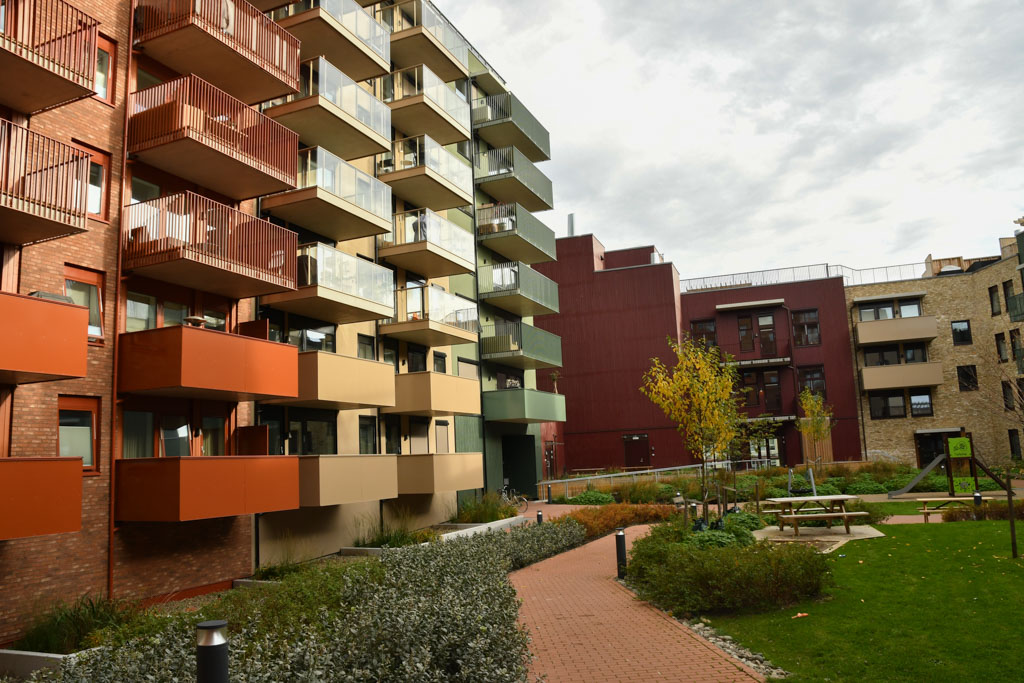
Bydel Bjerke is one of Oslo's most internally varied residential boroughs. Årvoll and Tonsenhagen provide greener, quieter and more established residential environments close to Lillomarka; Linderud and Veitvet are more post-war and apartment-oriented; Refstad and Risløkka sit between these models; while Økern, Ulven and Vollebekk are increasingly shaped by dense Hovinbyen redevelopment. Compared with the inner-city boroughs, Bjerke offers a materially lower purchase-price level while retaining strong metro access and substantial everyday services. The trade-off is uneven urban quality: some areas feel finished and residential, while others remain heavily influenced by major roads, construction, employment land and long-term transformation.
The quick answer
Buyers seeking better value than inner Oslo without giving up metro access; families comparing established outer-city neighbourhoods with newer urban developments; Oslo commuters; hybrid workers; and residents who prioritise practical services and green access over nightlife and dense inner-city street life.
People who want uniformly walkable inner-city streets, major nightlife and restaurant density, consistently quiet surroundings across the whole borough, or buyers who assume every part of Bjerke offers the same housing and development proposition.
At a glance
Housing
Neighbourhood-level market evidence
Apartment price per m²
as of 31 Dec 2025 · high confidence
Property type: apartment
Calculation type: average
Reference period: 31 Dec 2025
Confidence: high
86 300 kr/m²
Typical price
as of 31 Dec 2025 · high confidence
Property type: all
Calculation type: median
Reference period: 31 Dec 2025
Getting around
Metro connectivity is one of Bjerke's clearest strengths. Økern, Risløkka, Vollebekk, Linderud and Veitvet benefit from the Grorudbanen corridor, while bus services are especially important for Årvoll, Tonsenhagen and other areas away from the metro spine. Økern is the most suitable canonical central transport reference point. SearchNova has not stored a fixed Økern-to-Oslo-S journey time because a reproducible long-term Ruter measurement was not established without mixing in temporary 2026 operational conditions. The route and central accessibility are clear even though exact canonical minutes remain intentionally absent.
Exact journey time not yet measured
The scores describe overall transport fit. SearchNova does not convert them into a made-up minute estimate. Destination-specific journey times appear only when measured evidence is available.
Decision support
Lower-cost Oslo living with strong metro access and major internal variation
Lower price per m²
Compared across 13 supported dimensions
More affordable Oslo living, but the neighbourhood matters enormously
Lower price per m²
Compared across 13 supported dimensions
Day to day
Shopping
Other
Park
Forest
In depth
Buying in Bjerke generally offers better value than Oslo's expensive inner-city boroughs, although it is still far from a low-cost housing market. Official 2025 Bydelsfakta data places average block-apartment prices at approximately 86,300 NOK per square metre and the median total transaction price at 5.052 million NOK. Internal variation is significant: Ulven had a substantially higher median transaction price than Veitvet in the same year, reflecting differences in dwelling mix, development age and local housing markets. Buyers should therefore use borough averages as orientation rather than assuming Årvoll, Linderud, Veitvet, Ulven and Økern offer equivalent housing propositions.
Bjerke is structurally attractive to renters through its apartment-oriented housing stock, metro access and relative price position compared with inner Oslo. Linderud, Veitvet, Vollebekk, Ulven and Økern provide different renter propositions, from established post-war apartments to newer mixed-use developments. However, SearchNova does not currently have a sufficiently precise Bjerke-specific contracted-rent series to establish a canonical monthly-rent metric. Oslo-wide or grouped SSB rental evidence should therefore remain contextual only.
Bjerke can be a strong family option, but the right subarea matters considerably. Årvoll and Tonsenhagen provide the clearest combination of quieter streets, green surroundings and Marka proximity, while Refstad and Risløkka offer established residential environments closer to central Oslo. Linderud and Veitvet provide practical services and transport, while newer Vollebekk and Ulven appeal more to families prioritising modern apartments and metro access. Compared with inner-city Oslo, Bjerke offers a stronger value and space proposition, but housing is still predominantly apartment-based and conditions vary materially by micro-location.
Bjerke is a practical rather than destination student district. Metro and bus connectivity provide workable access to central Oslo, BI, OsloMet and UiO, while purchase prices are materially lower than in many inner-city boroughs. The main evidence limitation is rent: SearchNova does not currently have a Bjerke-specific contracted-rent benchmark, so student affordability should remain qualitative rather than being represented with a manufactured monthly figure.
Bjerke's lifestyle proposition depends heavily on where you live. Årvoll and Tonsenhagen emphasise green space, quieter residential life and forest access; Linderud and Veitvet offer established apartment districts with strong everyday services; Vollebekk provides a newer compact neighbourhood centre; and Økern and Ulven are becoming denser urban districts within Hovinbyen. Restaurants and cafés are adequate for daily life but Bjerke is not a major nightlife or destination-dining borough. Its strongest lifestyle combination is metro access, practical services, comparatively attainable housing and meaningful outdoor access rather than inner-city street intensity.
SearchNova verdict
Choose Bjerke when you want a more attainable Oslo housing market without moving far outside the city's rapid-transit network. Its strongest proposition is the combination of metro access, practical everyday services, greener established neighbourhoods and substantial long-term urban transformation. But Bjerke is not one residential product: Årvoll and Tonsenhagen offer a materially different experience from Ulven and Økern, while Linderud, Veitvet, Refstad and Vollebekk each occupy their own position between those extremes. The borough therefore rewards careful subarea selection more than simplistic borough-wide ranking. Hovinbyen adds meaningful future potential, but SearchNova should treat that as long-term urban-development exposure rather than a guaranteed investment-return story. Løren and Hasle must also remain outside the current Bjerke profile until the 2028 administrative reform takes effect.
Confidence: high
5 052 000 kr
No reliable neighbourhood rent yet
Available rental data does not isolate Bjerke closely enough from the surrounding area. Rather than present a broader-area average as local, we leave the number open.
Rent data: Not available
Metro-connected family living with some of Oslo's best housing and nature variety
May suit people who prioritise access to nature and outdoor life.
Lower price per m²
Compared across 13 supported dimensions