Demand
Not enough local evidence
SearchNova does not yet have demand indicators matched closely enough to the provider market geography used for Frogner to classify local housing-demand pressure.
Latest evidence period · 2026
Loading SearchNova
Preparing the next decision step…
SearchNova Homes — Location Intelligence
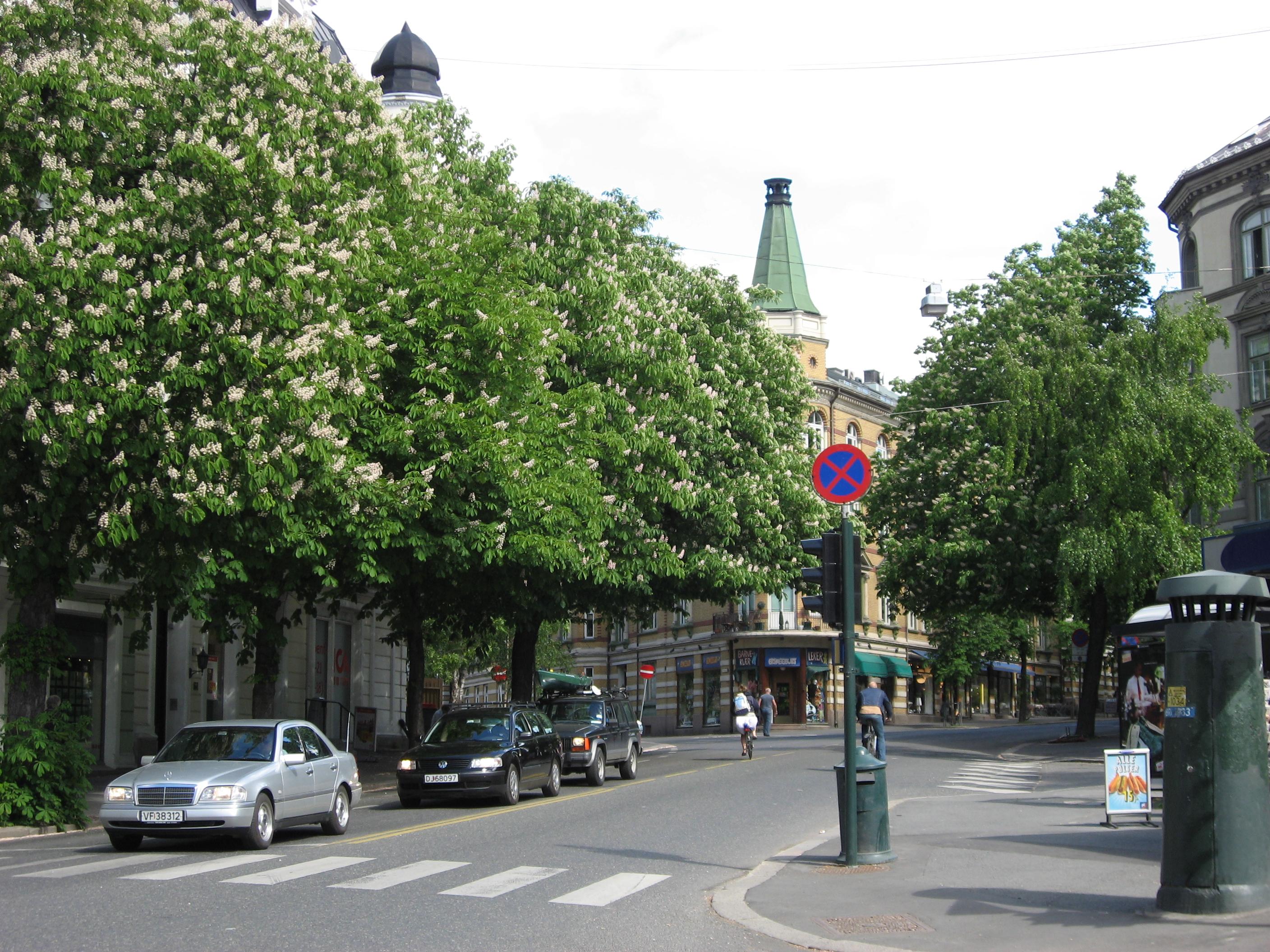
Premium inner-west Oslo borough combining historic urban neighbourhoods, major park access and the lower-density coastal environment of Bygdøy.
Premium inner-west Oslo living with exceptional parks, services and central access
Bydel Frogner combines some of Oslo's most established inner-west residential neighbourhoods with Majorstuen's urban intensity, Frognerparken's exceptional green space and Bygdøy's lower-density coastal environment. Much of the borough offers excellent access to shops, restaurants, cafés, public transport and central Oslo, but the residential experience varies substantially between Majorstuen, Frogner, Uranienborg, Skillebekk and Bygdøy. Housing is expensive by Oslo standards and the borough should be understood as a premium location rather than a value-oriented alternative.
The quick answer
People prioritising premium central Oslo living, excellent parks and outdoor access, established services, strong public transport and walkability; professionals wanting easy access to central employment areas; families able to accommodate the housing premium; and buyers who value neighbourhood quality and location more than maximum space per krone.
Buyers whose main priority is affordability or maximum living space for their budget, students seeking inexpensive private accommodation, households requiring uniformly easy parking, or residents who want the same dense public-transport coverage in every part of the borough.
At a glance
Housing
Local market evidence for this area
Price per m²
as of 30 Jun 2026 · high confidence
Property type: all
Calculation type: average
Reference period: 30 Jun 2026
Confidence: high
Method notes: Current Oslo:Frogner quarterly market series. Provider states that the statistics are based on data/calculations from Eiendom Norge, Eiendomsverdi and FINN.no. SearchNova preserves the provider geography label rather than silently treating it as an Oslo kommune statistical polygon.
Source: Verified source metadata is available in SearchNova records.
122 863 kr/m²
Local market evidence for this area
Housing economics
This is not an investment score. SearchNova separates demand, housing supply, labour-market links and economic capacity, and shows when local evidence is not strong enough.
Demand
SearchNova does not yet have demand indicators matched closely enough to the provider market geography used for Frogner to classify local housing-demand pressure.
Latest evidence period · 2026
New housing response
SearchNova does not yet have comparable household-formation and completed-dwelling evidence matched to the provider market geography used for Frogner, so no supply-pressure classification is made.
Latest evidence period · 2026
Jobs & commuting
Oslo-wide employment and commuting totals cannot be assigned to the provider market geography used for Frogner. Labour-market accessibility should be measured directly at a matching local geography.
Latest evidence period · 2026
Getting around
Frogner is exceptionally well positioned for commuting within Oslo. Majorstuen is one of the city's major public-transport hubs, while tram and bus corridors serve much of the urban borough. Walking and cycling are also realistic for many central destinations. Bygdøy is the principal exception: it remains well connected by bus but is less transit-dense than Majorstuen and central Frogner. Temporary 2026 metro works around Majorstuen should not be interpreted as the borough's normal long-term transport baseline.
COMMUTE EXAMPLE
Off-peak
Bus · 1 transfer · Includes 4 min walking
Typical departure around 13:00
20 min
medium confidence · 15 Sept 2026
Decision support
Inner-city Oslo convenience with Akerselva, parks and strong neighbourhood life
Compared across 13 supported dimensions
Inner-city Oslo living with exceptional everyday convenience
Lower price per m²
Compared across 13 supported dimensions
Day to day
Shopping
Other
Park
Waterfront
In depth
Buying in Frogner means entering one of Oslo's most expensive and established residential markets. Current market evidence places the borough at roughly 123,000 NOK per square metre, reflecting the premium attached to centrality, historic housing, services and neighbourhood reputation. Apartments dominate much of the urban borough, while Bygdøy provides a materially different lower-density housing environment. Buyers prioritising maximum space per krone will generally find stronger value outside inner Oslo.
Frogner is highly attractive to renters who prioritise centrality, public transport, services and access to Oslo's inner-west lifestyle. Majorstuen and the denser urban neighbourhoods are particularly practical for renters who want daily life without a car. The main constraint is affordability. SearchNova does not currently have sufficiently comparable Frogner-specific contracted-rent evidence to publish a canonical monthly-rent metric, so broader Oslo rental statistics should remain contextual rather than being represented as Frogner-level rent.
Frogner can be highly attractive for families that can accommodate the housing cost. Frognerparken, Bygdøy, established services and strong everyday accessibility provide substantial advantages, while quieter residential pockets offer a different proposition from the busiest streets around Majorstuen. The principal trade-offs are price, limited space in many apartments and traffic or urban activity in the densest areas. Bygdøy provides a distinctly lower-density family proposition within the same borough.
Students benefit from excellent public transport, centrality, cafés, services and access to major educational and employment areas. Majorstuen is particularly practical. The significant disadvantage is housing cost: Frogner is better understood as a high-convenience lifestyle option for students who can afford it than as a natural student-budget district.
Frogner offers one of Oslo's strongest combinations of urban convenience and high-quality outdoor access. Majorstuen and Bogstadveien provide dense retail, cafés and services; Frogner, Uranienborg and Skillebekk combine established residential streets with central-city accessibility; Frognerparken provides exceptional urban green space; and Bygdøy adds coastline and a substantially greener, lower-density environment. This internal variety is one of the borough's defining strengths.
SearchNova verdict
Choose Frogner when you want one of Oslo's strongest combinations of centrality, established residential quality, everyday convenience and outdoor access and are prepared to pay for it. The borough is more varied than its premium reputation suggests: Majorstuen provides dense urban convenience, traditional Frogner and Uranienborg offer established inner-west streets, and Bygdøy provides an unusually green and coastal residential environment. The central compromise is affordability. Frogner delivers an exceptionally complete residential package, but very little of that package comes cheaply.
1-bedroom rent
as of 31 Dec 2025 · medium confidence
Property type: one bedroom
Calculation type: estimate
Reference period: 1 Jan 2025 to 31 Dec 2025
Confidence: medium
Method notes: SSB Rental Market Survey table 09897 standardized monthly rent for a 50 sqm, 2-room dwelling. This value represents a grouped Oslo rental price zone spanning multiple districts. It is a rental price zone benchmark and must be used only as broader zone-level rental context, not as a neighbourhood-specific asking or achieved rent.
Source: Verified source metadata is available in SearchNova records.
16 700 kr/month
Purchase valuation
Frogner has strong current market evidence showing a high purchase price per square metre. The provider market geography is preserved as published rather than treated as an exact Oslo statistical polygon, and SearchNova does not yet have a matching local income or rent denominator for a broader affordability conclusion.
Latest evidence period · 2026
Morning rush hour
Bus · 1 transfer · Includes 4 min walking
Typical departure around 08:00
21 min
medium confidence · 15 Sept 2026
Representative public-transport journeys from Frogner to Oslo S. Times include the walking shown and are examples rather than door-to-door guarantees.
Central Oslo living with very different neighbourhoods behind one borough name
Compared across 13 supported dimensions