What does a 4 million NOK home budget get you around Oslo?
How far does a 4 million NOK home budget stretch around Oslo? SearchNova compares housing purchasing power, commute times and the location trade-offs behind the numbers.
Editorial guidance from SearchNova editorial
Four million NOK sounds like one housing budget. In practice, what that money can buy changes dramatically depending on where around Oslo you use it.
SearchNova compared current price-per-square-metre references across several Oslo and Greater Oslo markets and combined them with our location and commute data. The useful question is not simply where you get the most square metres, but what you gain — and what you give up — when you move the same budget from one location to another.
The quick comparison
| Area / market reference | Approx. price per m² | 4M NOK space equivalent |
|---|---|---|
| Frogner | 122,863 NOK | ~33 m² |
| Sagene | 114,979 NOK | ~35 m² |
| Grünerløkka | 108,128 NOK | ~37 m² |
| Furuset / Alna reference | 69,950 NOK | ~57 m² |
| Ammerud, Kalbakken & Rødtvet / Grorud reference | 65,384 NOK | ~61 m² |
| Fjellhamar / Lørenskog reference | 66,637 NOK | ~60 m² |
| Lillestrøm sentrum & Strømmen / Lillestrøm municipality reference | 58,088 NOK | ~69 m² |
The headline: the same 4 million NOK budget represents roughly twice as much housing space in some Greater Oslo market references as it does in expensive inner-Oslo districts. These are simplified purchasing-power comparisons, not examples of specific homes currently for sale.
Four million NOK does not mean the same thing everywhere
The difference between Frogner and the broader Lillestrøm municipality reference is about 36 square metres. Around 33 m² may mean a compact apartment, while around 60–70 m² can open the possibility of another bedroom, office, storage or family space.
The Grorud reference tells a similar story. At about 65,384 NOK/m², 4 million NOK corresponds to roughly 61 m², making Ammerud, Kalbakken and Rødtvet useful comparison points for buyers who want to stay in Oslo while stretching the budget further.

More space does not always mean a much longer commute
Housing discussions around Oslo often assume that moving farther away automatically creates a much longer commute. SearchNova's representative journeys show why that shortcut can be misleading.
| Location | Representative journey to Oslo S |
|---|---|
| Lillestrøm sentrum | ~12 min |
| Grünerløkka | ~17 min |
| Frogner | ~21 min |
| Sagene | ~22 min |
| Fjellhamar | ~22 min |
| Strømmen | ~26 min |
This does not mean Lillestrøm sentrum is more convenient than Frogner for everyone. Someone working at Majorstuen, Fornebu or another destination can get a very different result. It does show that geographical distance from central Oslo does not translate directly into travel time. Fast rail can change the economics of location.

The real trade-off is not simply central versus far away
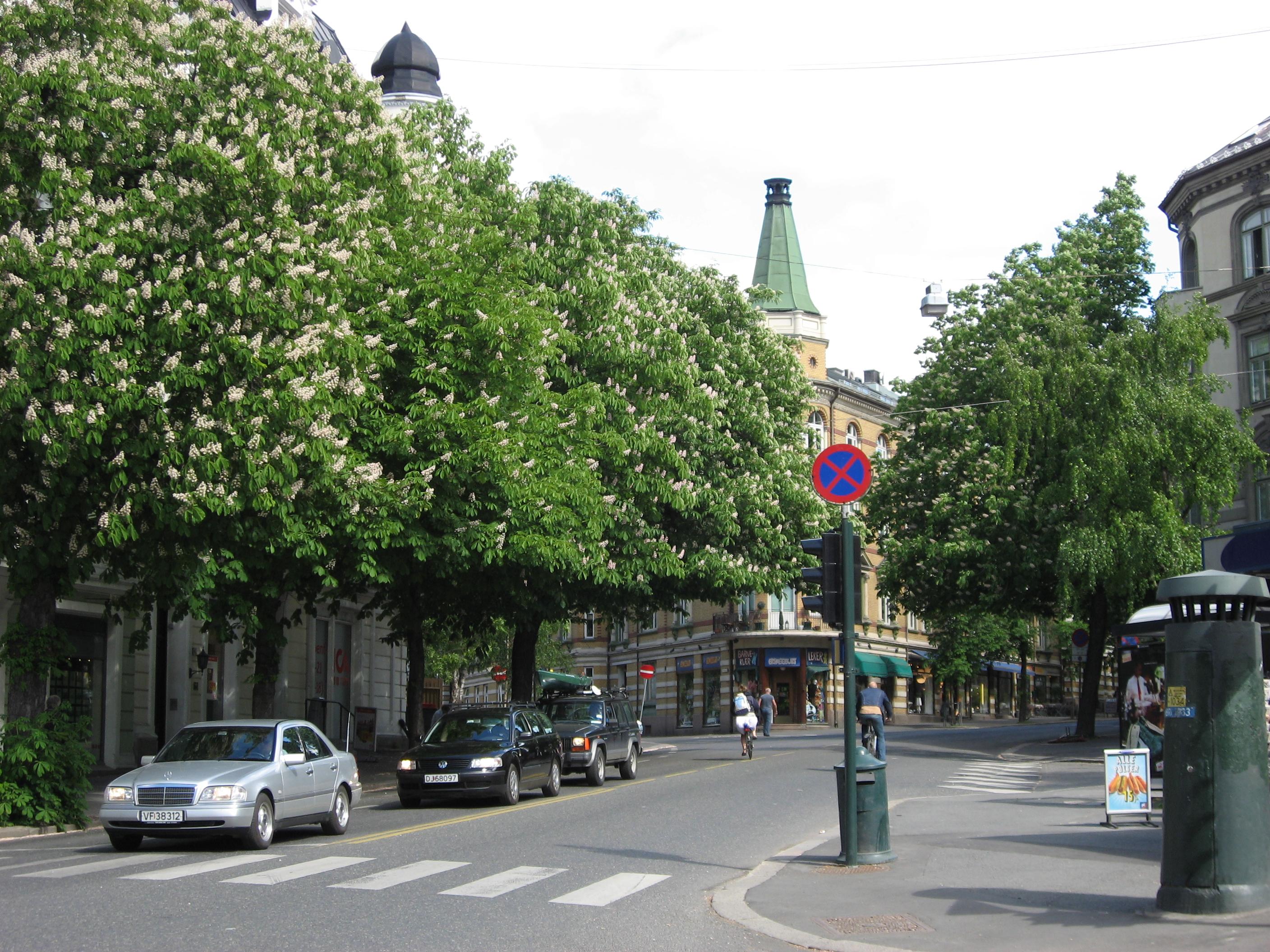
A buyer choosing Frogner may accept less living space in return for centrality, parks, restaurants, walkability and established urban character. A buyer choosing Lillestrøm sentrum may access much stronger broader-market housing purchasing power while keeping very fast rail access to Oslo S.
Neither choice is automatically better. They are different combinations of space, location, accessibility, lifestyle, housing cost and transport convenience.
A better way to think about housing value
Instead of asking only where housing is cheapest, ask what you gain for every extra kilometre you move away from your preferred location.
- For a family, another bedroom may matter more than restaurants outside the door.
- For a young professional, walkability and urban life may matter more than another 20 square metres.
- A household that can avoid a second car may value a rail-connected location differently from a cheaper but car-dependent area.
A more useful housing-value equation is: housing cost + transport + commute time + car dependence + space + everyday convenience + lifestyle.
Lillestrøm shows why the calculation gets interesting
The broader Lillestrøm municipality currently has the lowest price-per-square-metre reference in this comparison. At roughly 58,088 NOK/m², 4 million NOK represents around 69 m² of theoretical housing purchasing power. At the same time, SearchNova's representative journey from Lillestrøm sentrum to Oslo S is around 12 minutes.
The limitation matters: the price figure is for Lillestrøm municipality as a whole, not specifically Lillestrøm sentrum. Prices in the centre can differ materially from quieter or more suburban parts of the municipality. The useful conclusion is that the wider market has very different housing economics from expensive inner Oslo while parts of the municipality retain exceptional rail access.
You do not necessarily have to leave Oslo to stretch the budget
The broader Grorud and Alna references are roughly 65,384 and 69,950 NOK/m². That gives a 4M equivalent of about 61 m² and 57 m² respectively. This is why areas such as Ammerud, Kalbakken, Rødtvet and Furuset deserve attention from buyers who want to stay inside Oslo while increasing their housing purchasing power.
What are you actually paying the housing premium for?
In Grünerløkka, the premium may buy a highly walkable urban lifestyle. In Fjellhamar, the attraction may be rail access combined with a more family-oriented setting. In Lillestrøm sentrum, it may be regional rail connectivity and car-light convenience. In Ammerud or Rødtvet, it may be a combination of more attainable housing economics, metro access and proximity to nature.
Different households can look at the same numbers and reasonably make different decisions. The important question is what the more expensive location provides that you personally value enough to pay for.
So where does 4 million NOK go furthest?
If maximum housing space is the main priority, the broader Lillestrøm, Grorud, Lørenskog and Alna references stretch the budget considerably further than the inner-Oslo examples in this comparison. If central urban life is the priority, Frogner, Grünerløkka and Sagene may still make sense — but the space sacrifice is substantial.
The most interesting locations may sit between those extremes: places where housing prices fall materially but accessibility remains strong. That is the housing-economics question SearchNova wants to make easier to answer.
Renting instead?
We previously ran the same type of experiment with a 15,000 NOK monthly rental budget. You can also compare places for commuting to Oslo if travel time is the hard constraint in your shortlist.
Methodology
This is an exploratory SearchNova housing-economics analysis, not a property valuation or a statement about what an individual home should cost. We calculate a simple purchasing-power equivalent: 4,000,000 NOK divided by the relevant average price-per-square-metre reference.
The calculation excludes purchase costs, financing structure, common debt, common charges, renovation needs and differences between property types. Municipality and borough references are used as broader market context and should not be read as exact prices for every neighbourhood, building or street.
A cheaper square metre only creates value if the location still supports the life you want to live. The real question is not where you can buy the biggest home, but where your budget gives you the best combination of home, commute and everyday life.
More guides
Best places to live for commuting to Oslo — depending on the life you want outside work
Compare places for commuting to Oslo using representative journeys, walking and transfers — then weigh the family, nature, quietness and everyday life you get at home.
Where to live near Oslo: a guide to choosing the right area
A practical, evidence-led guide to choosing where to live near Oslo based on commute, everyday convenience, nature, quietness, car-free living, family needs and the trade-offs that matter to you.
What does 15,000 NOK/month rent around Oslo?
We compared rental examples in seven areas with morning travel time to Oslo S. The surprise: moving outside Oslo did not always mean a longer trip, and moving farther out did not always mean more space.
Explore locations
Frogner · Oslo
A high-price inner-Oslo benchmark where 4M represents about 33 m² at the current area reference.
Explore area →Sagene · Oslo
A central Oslo comparison point with strong everyday access and a high housing-price reference.
Explore area →Grünerløkka · Oslo
Urban, highly walkable and expensive per square metre in the current comparison.
Explore area →Furuset · Oslo
An eastern Oslo option represented here by the broader Alna price reference.
Explore area →Ammerud · Oslo
An eastern Oslo option represented here by the broader Grorud price reference.
Explore area →Kalbakken · Oslo
A Grorud-district comparison point with metro access and materially lower area-level prices than inner Oslo.
Explore area →Rødtvet · Oslo
Another Grorud-district option where the broader market reference stretches 4M further.
Explore area →Basis: SearchNova location profiles and representative Oslo S commute measurements, September 2026; Krogsveen area price statistics, September 2026, based on Eiendom Norge, Eiendomsverdi and FINN.no; Calculations: SearchNova, 4,000,000 NOK divided by the relevant price-per-square-metre reference.